I booked a room in the city. Our friend was turning 50 and wanted us to come to their party. Since we’d be travelling anyway, and I was exhausted when I made the reservation, I locked in for two nights, figuring that even if we didn’t make any other plans, I could do with a day of lying in a hotel bed doing absolutely nothing.
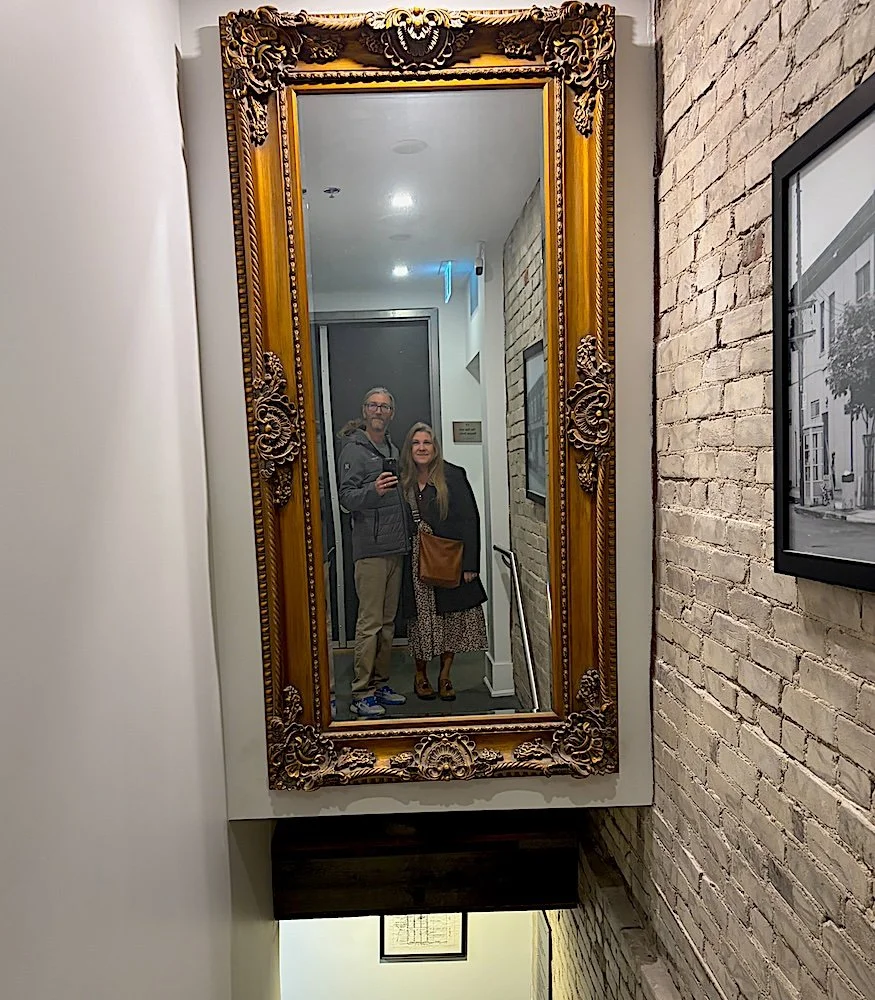
Here we are in our hotel stairway on our way to dinner
Then the party was cancelled, and I, of course, had opted for the cheaper “no cancellations or refunds” option. But no worries. Exhausted or not, I decided to make the best of it and call it an unexpected (and late) anniversary getaway. In a boutique hotel. Over a strip club.
What? Did I forget to mention that…? So did the listing.
But whatever. It was fine. Actually, the ump-ta ump-ta ump-ta that pulsed through our floor until 2:30 a.m. was kind of soothing.
The room was beautiful and comfortable, the neighbourhood was straight out of an ’80s TV show, with its old store fronts and zero franchises, and we had dinner at a tiny restaurant with friendly service and warm patrons.
And no, I didn’t settle for a day in bed doing nothing; instead, I packed our time with loads of fun exploration. We’ve been to Toronto many times, so it’s fun to choose areas we haven’t visited before. Including a location from When The Trees All Burned.
In early drafts of the manuscript, the characters of Aiya and Ryan lived in a Scarborough suburb. Aiya is an artist and Ryan is an arts professor, and the story of how they got together is problematic, to say the least.
A beta reader flagged this choice, saying she didn’t think it matched the aesthetic of these two characters. “They’d live in some kind of downtown loft,” she said. And she was absolutely right.
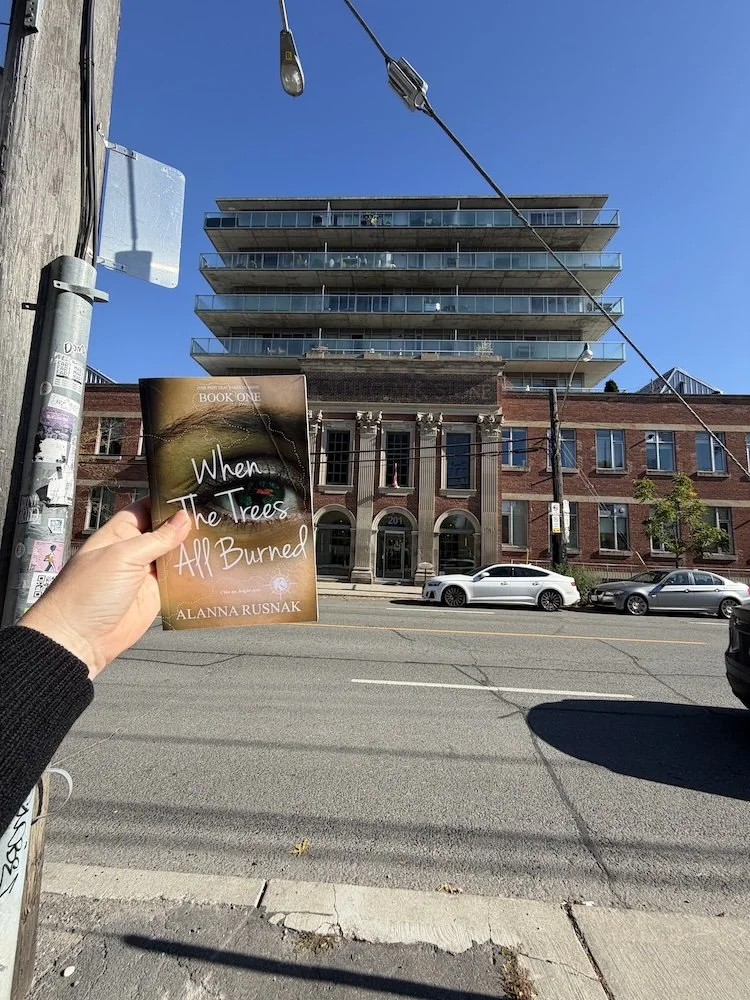
That launched the hunt for the perfect location. I needed somewhere with easy TTC access, somewhere an artist could set up her own studio, somewhere a Jeep owner would still drive to work even though transit could get him there just as fast, close to U of T but enough of a buffer that Aiya would get a reprieve from Ryan… and that’s when I found 201 Carlaw Avenue: once one of Toronto’s old printing factories, converted into lofts in 2010.
“I knew he took immeasurable pride in the fact that we lived within a retired printing factory in this newly gentrified section of Old Toronto. When I had suggested we look for a home in the suburbs to be near my sister he had scorned me for always wanting to be ordinary. He grew a pretentious moustache after we moved in, and though I wanted to hate it, I loathed how well it fit his face. We matched this loft, he and I—an artist and a professor—and I had to admit I loved the wide open space that lent itself well to creativity. And though my art hung on the walls in the hallway, the loft never felt like mine. My large piece, a lovely blend of greys and pinks called “Haunting Été” would have fit beautifully over the fireplace, but the great room was where he showcased his collection of “real art”—postmodern and aggressive. He called it brave. My work leaned more romantic. He called it boring.”
All my research happened online, and while it would have been helpful to visit the actual location before I wrote about it, I never made it to that part of the city. Until last weekend, when we made a special trip to Leslieville in order to see it.
Not that I hadn’t seen it before. Google Street View is an amazing tool when you’re trying to experience a location you can’t actually get to. Still, it lived differently in my head. Even after studying it on Street View, I pictured the building with a front staircase and overflowing planter boxes, but the main entrance sits right on the street, without a flower in sight. Not that it actually matters. I don’t believe I misrepresented the building in any way. For all anyone knows, when I say “main staircase” I could have meant the interior stairs. So yeah. That’s exactly what I meant.
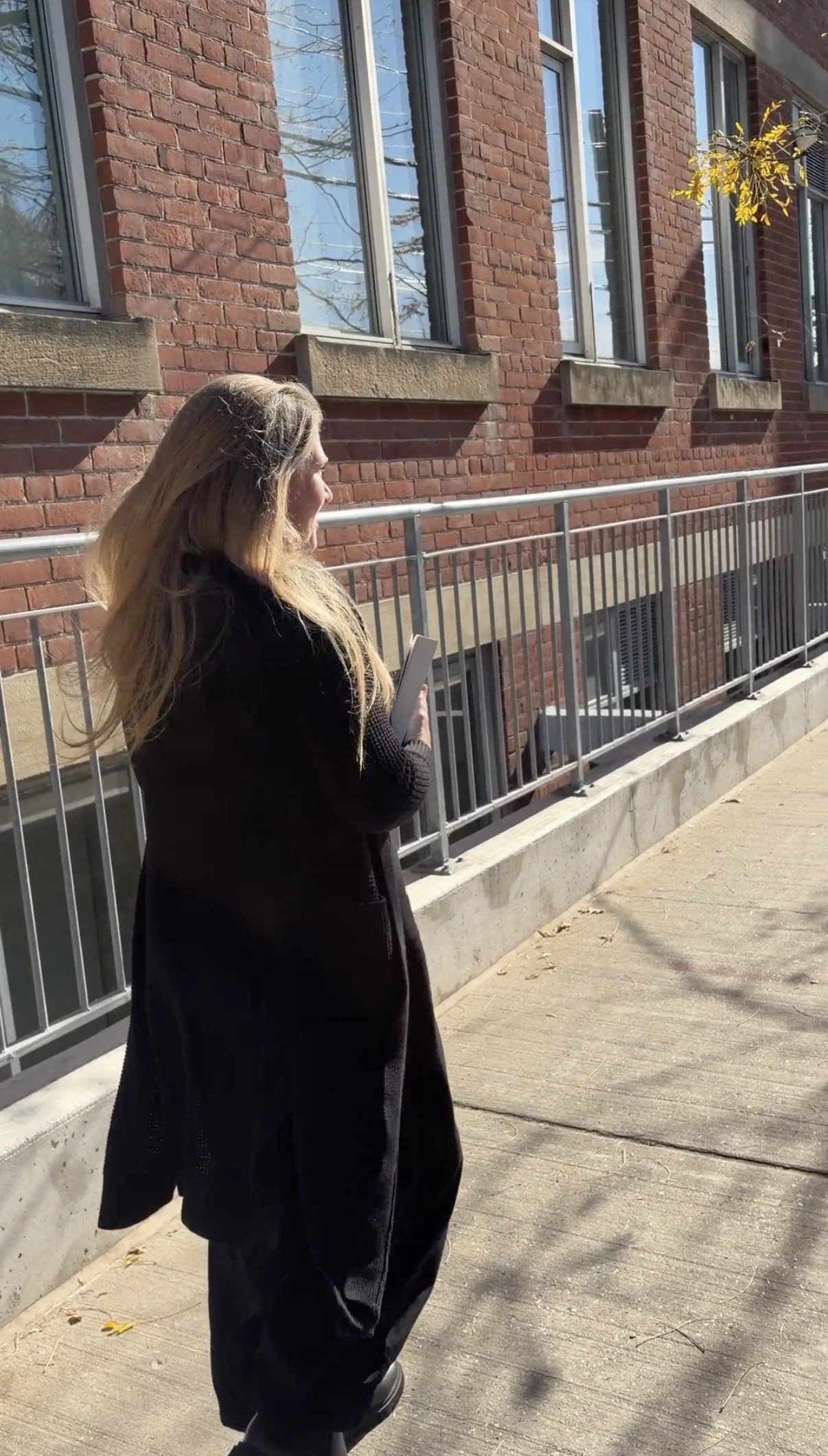
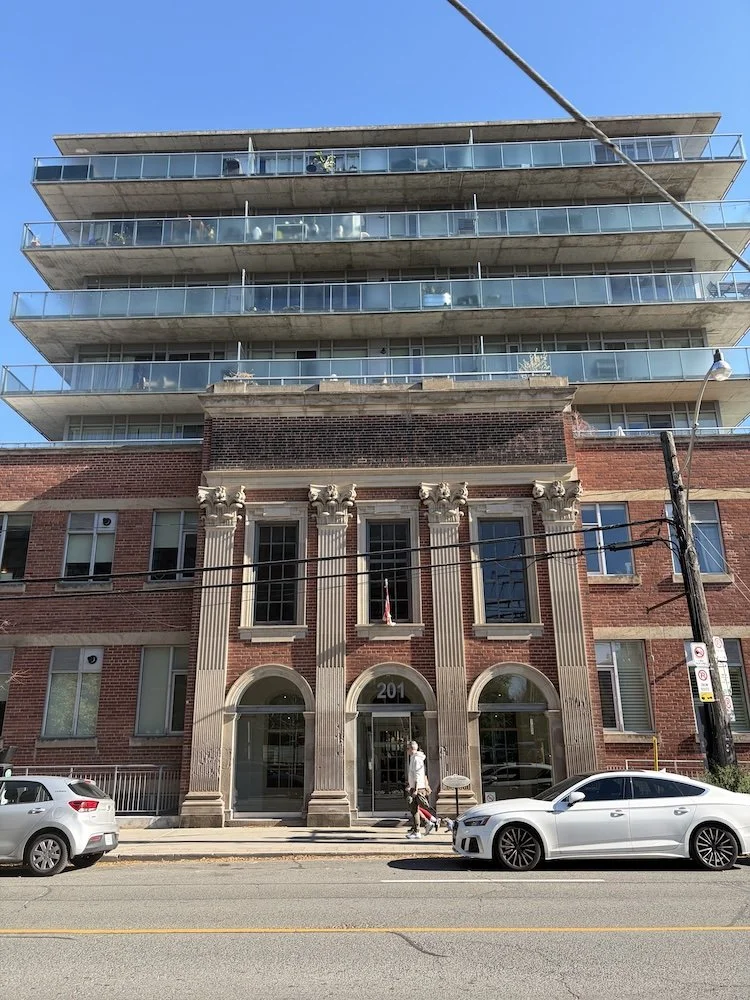
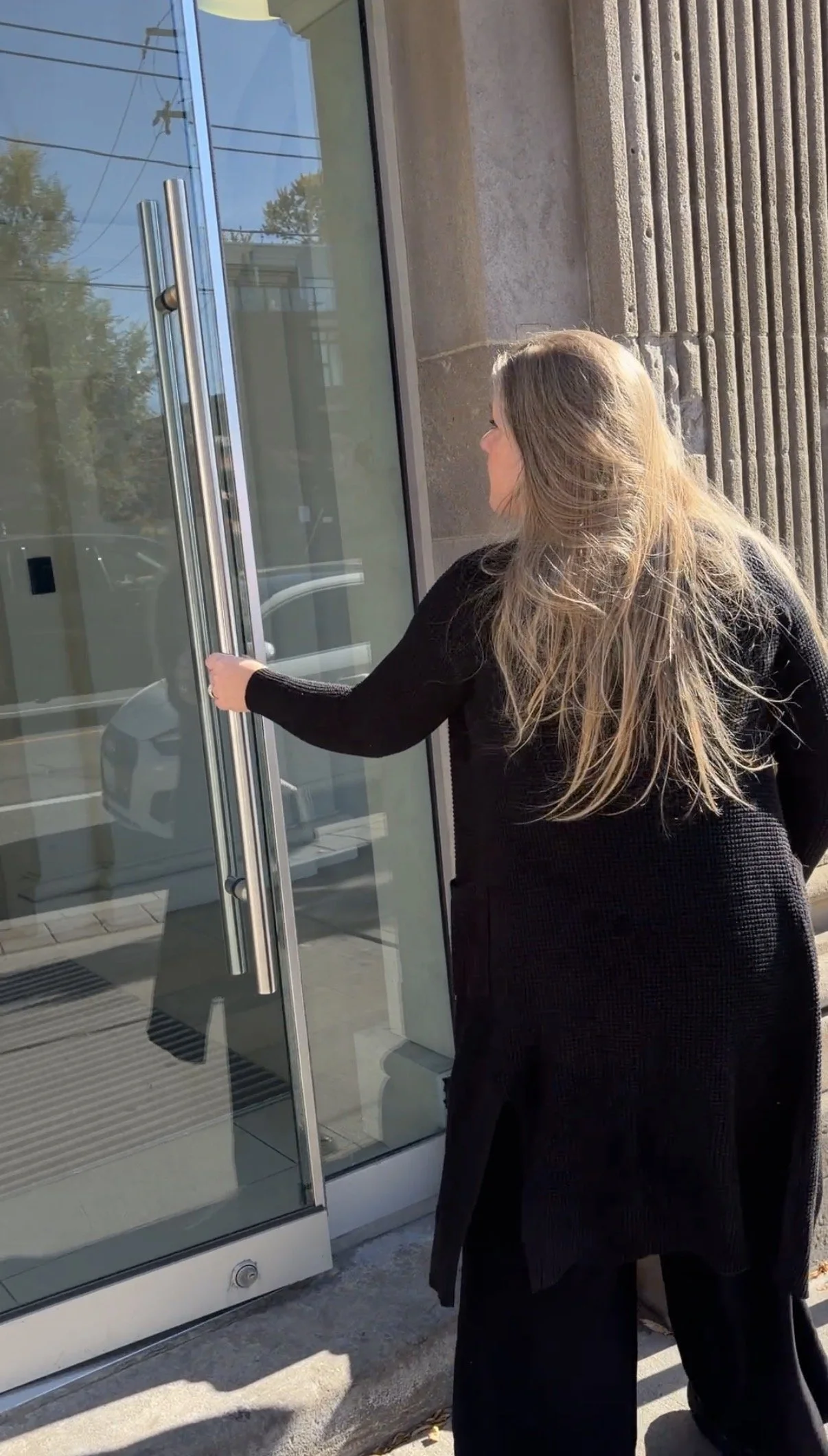
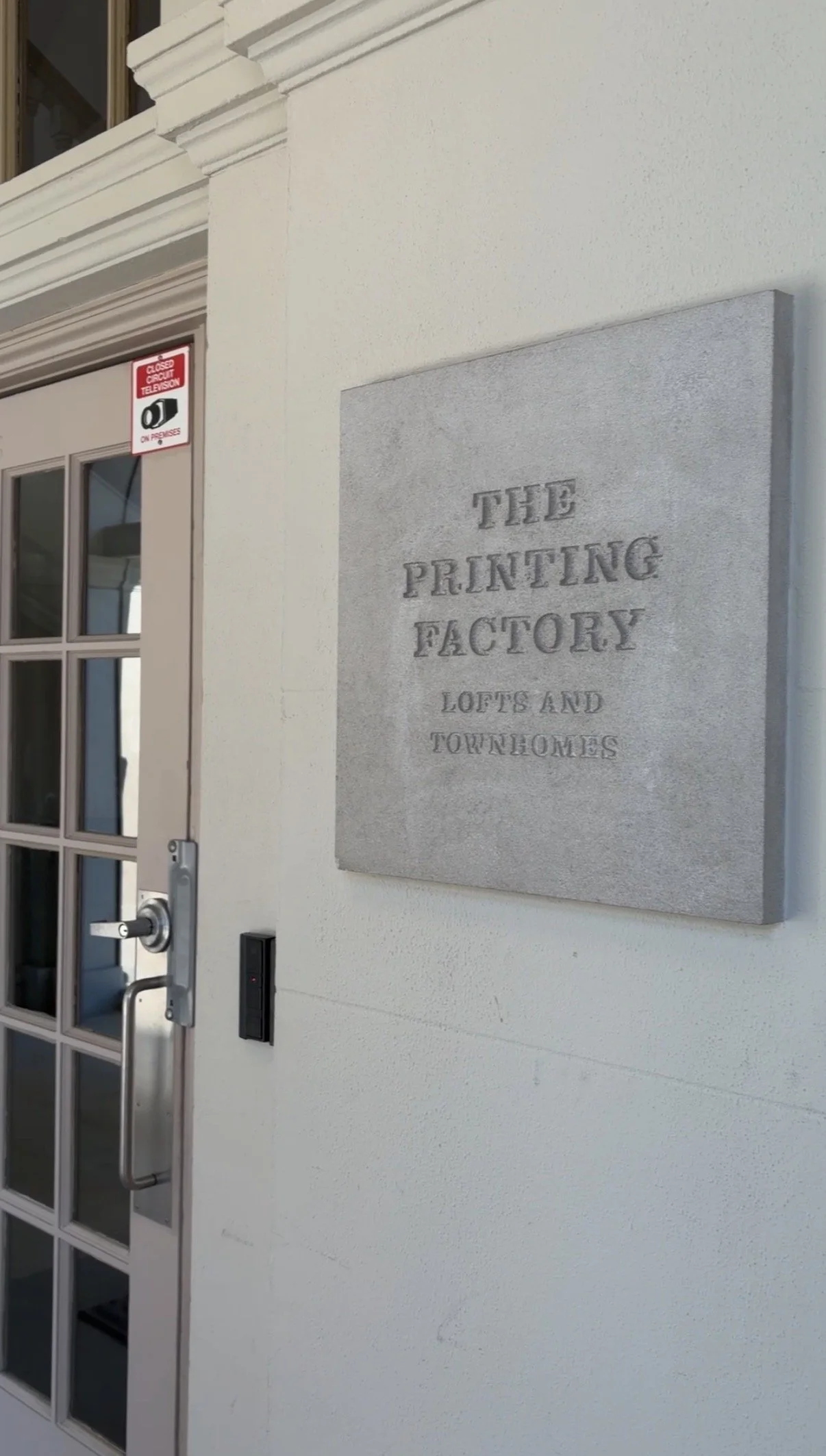
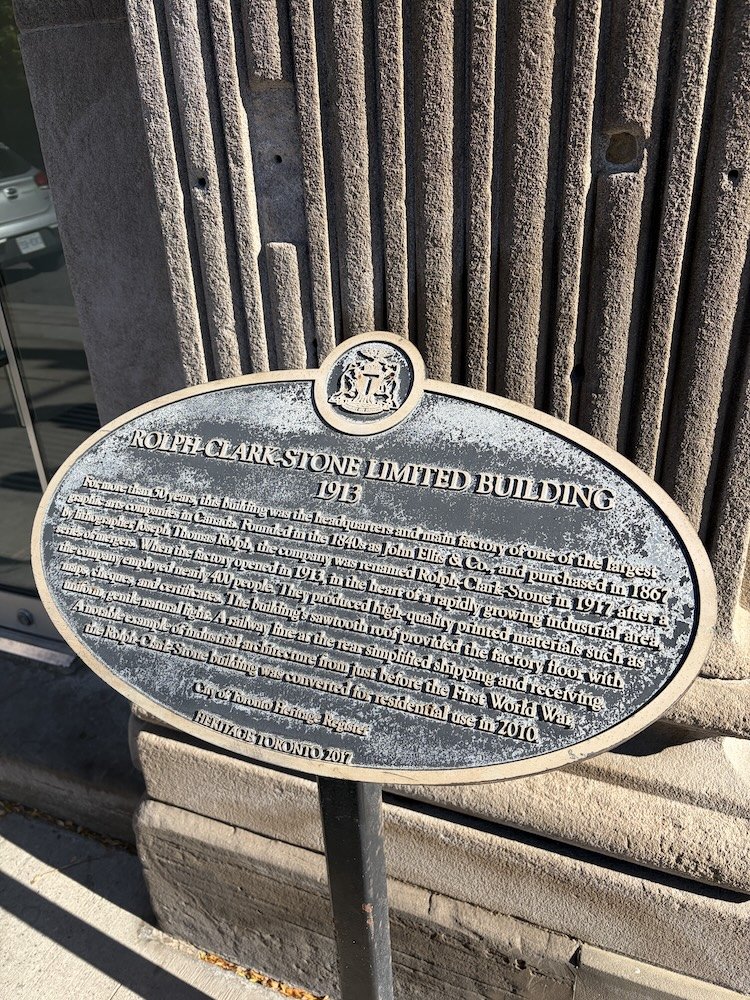
We couldn’t go past the locked interior doors. A firm sign announced “We do not open the door for strangers,” so we didn’t even try.
I use real locations throughout this book. I think it adds a level of realism—plus it gives me excuses to explore new places as I continue to write the series. A recent review said “In Rusnak's world building, even while creating destruction in Ontario, she did her best to represent the area correctly” which (I think) is a compliment. I’ve also had people tell me they grew up near a certain location or about the time they visited another site, or how their deep love for the north made them pick up this book. I love when a piece of fiction can connect with people in such a tangible way.
Had I visited 201 Carlaw before I wrote the scenes set there, I don’t know that I would have done anything differently, but I can tell you that I felt a keen sense of ownership as I stood on that property. Important things happened there. Justice happened there. And if you don’t know what I’m talking about, you should definitely pick up a copy of the book.
“Carlaw Avenue appeared as it always did. I heard car doors close and engines run. No one lifted their head to look at me. I was invisible. I was a conquest. I was Just Aiya. Why would anyone want me?”

Book 1 in The Path That Takes Us Home
Forty years ago, on the night his mother died, Rajiv Montgomery Noah received a vision of fire that would consume the world. While others dismissed the growing signs of climate collapse, he devoted his life to an improbable task: building a sanctuary in the wilderness of northern Ontario—a dome erected over an abandoned mine, designed to shelter two hundred souls within the ancient forest.
Now, as the world teeters on the edge of catastrophe, Rajiv's dome stands as both monument and shelter—a testament to hope, hubris, and the weight of choosing who survives. But neither the dome's reinforced walls nor Rajiv's careful calculations can prepare its inhabitants for the moral complexity of being the chosen few, or shield them from the haunting question: what makes survival worthwhile when everything familiar has burned away?
When The Trees All Burned, the first novel in The Path That Takes Us Home series, is a meditation on grief, purpose, and human resilience in the face of environmental collapse. In the tradition of Station Eleven and The Road, it asks not just how we might survive a dying world, but who we become in the surviving.
WAIT! HAVE YOU TAKEN THE ALGORITHM QUIZ TO FIND OUT IF YOU HAVE WHAT IT TAKES TO BE CHOSEN FOR THE DOME? “Winning” participants will be offered a free little bonus to add to their order. Pop over and take the quiz if you’d like to add something fun to your order.