The Day I Accidentally Promoted AI Music (and Why I Had to Make It Right)
Integrity isn’t about being perfect.
It’s about what you do when you realize you’ve gotten off track.
A few days ago I made an Instagram carousel. It contained photos my husband took of me, leaning against a pillar at Union Station in Toronto, with my phone in hand: basically me watching him approaching me as I was figuring out the directions to Little Canada and he was returning from the washroom. But I repurposed it (as all wise artists do) to tell a story about the author’s life. The pillar? That's all the worldbuilding and character development we authors carry around. Me? I'm the author, shouldering all of it. The phone? Ideas. Those beautiful, terrible, lightning-strike thoughts that either save us or send us spiraling.
The sequence told a story: She's got it all together (spoiler: I don't). Wait—an epiphany! Oh no, I've boxed myself in. Freedom! The story will guide me. To hell with the box.
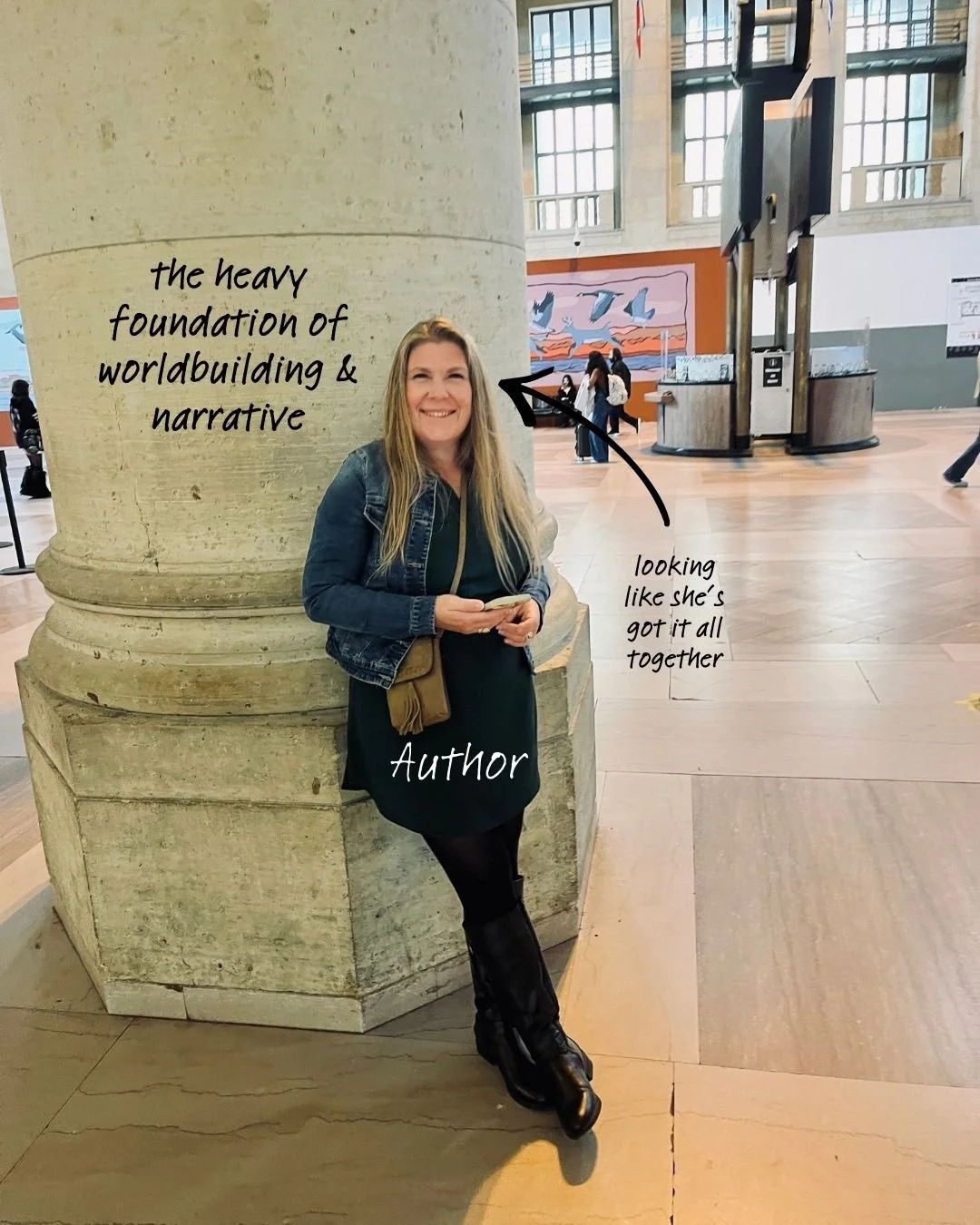
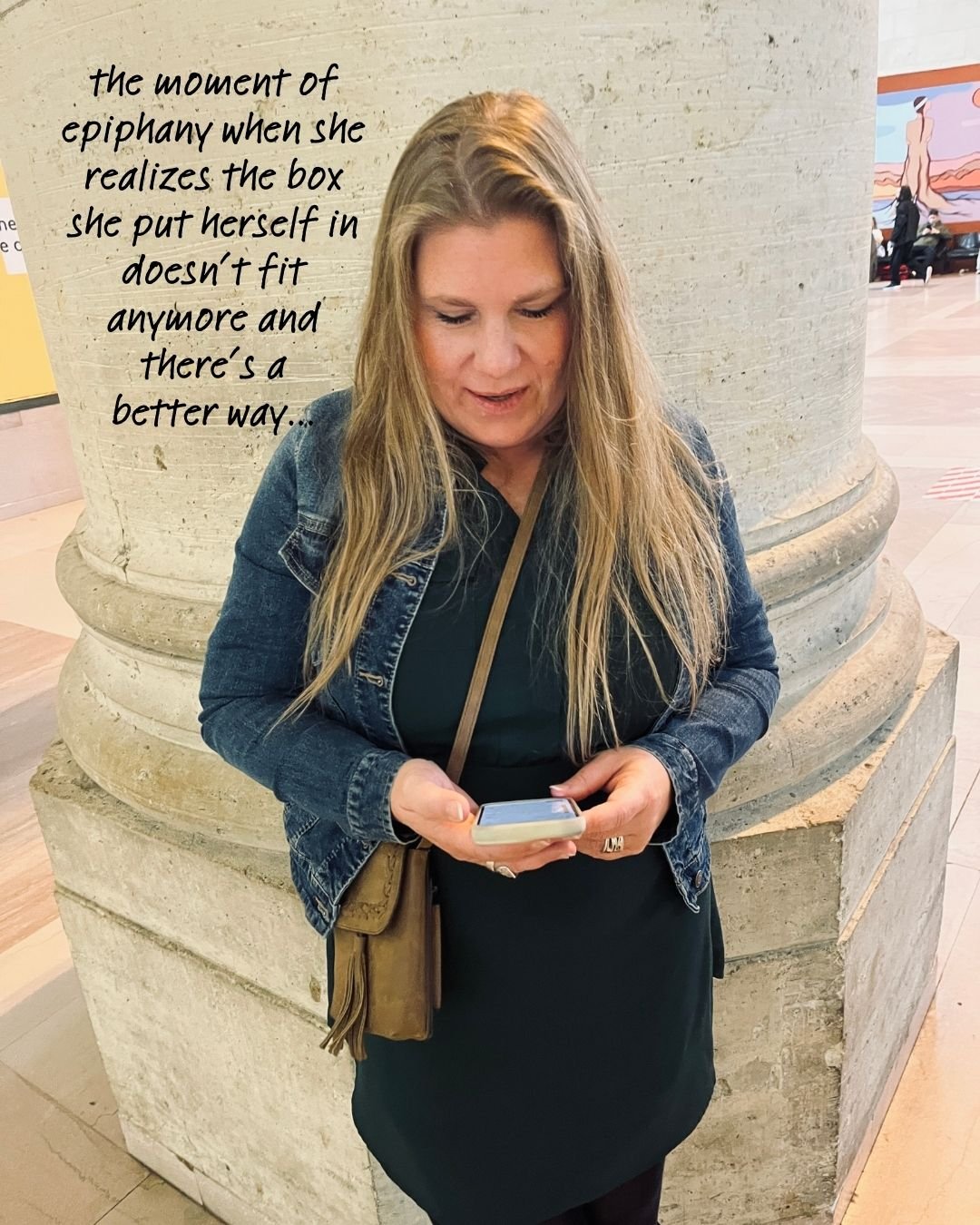
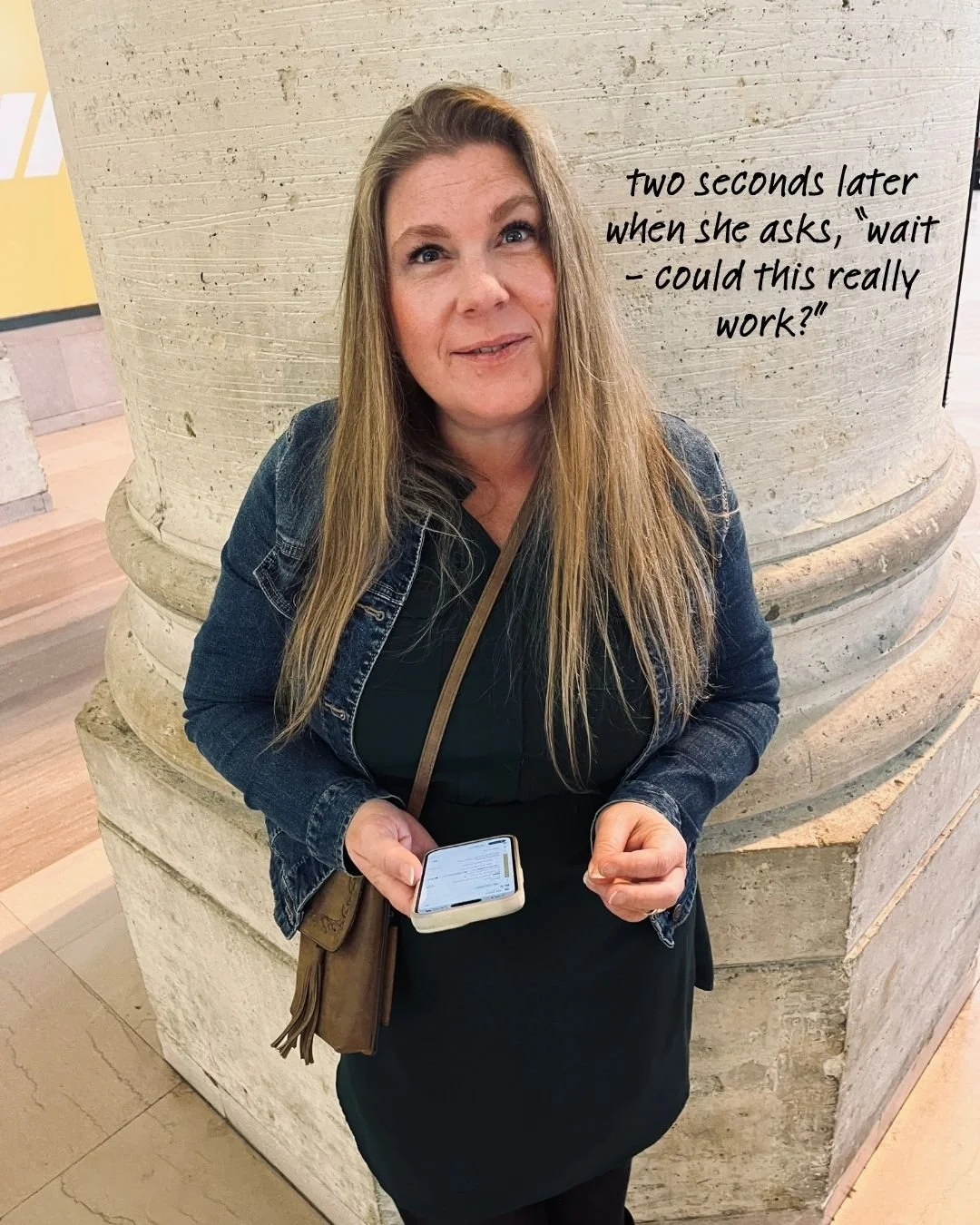
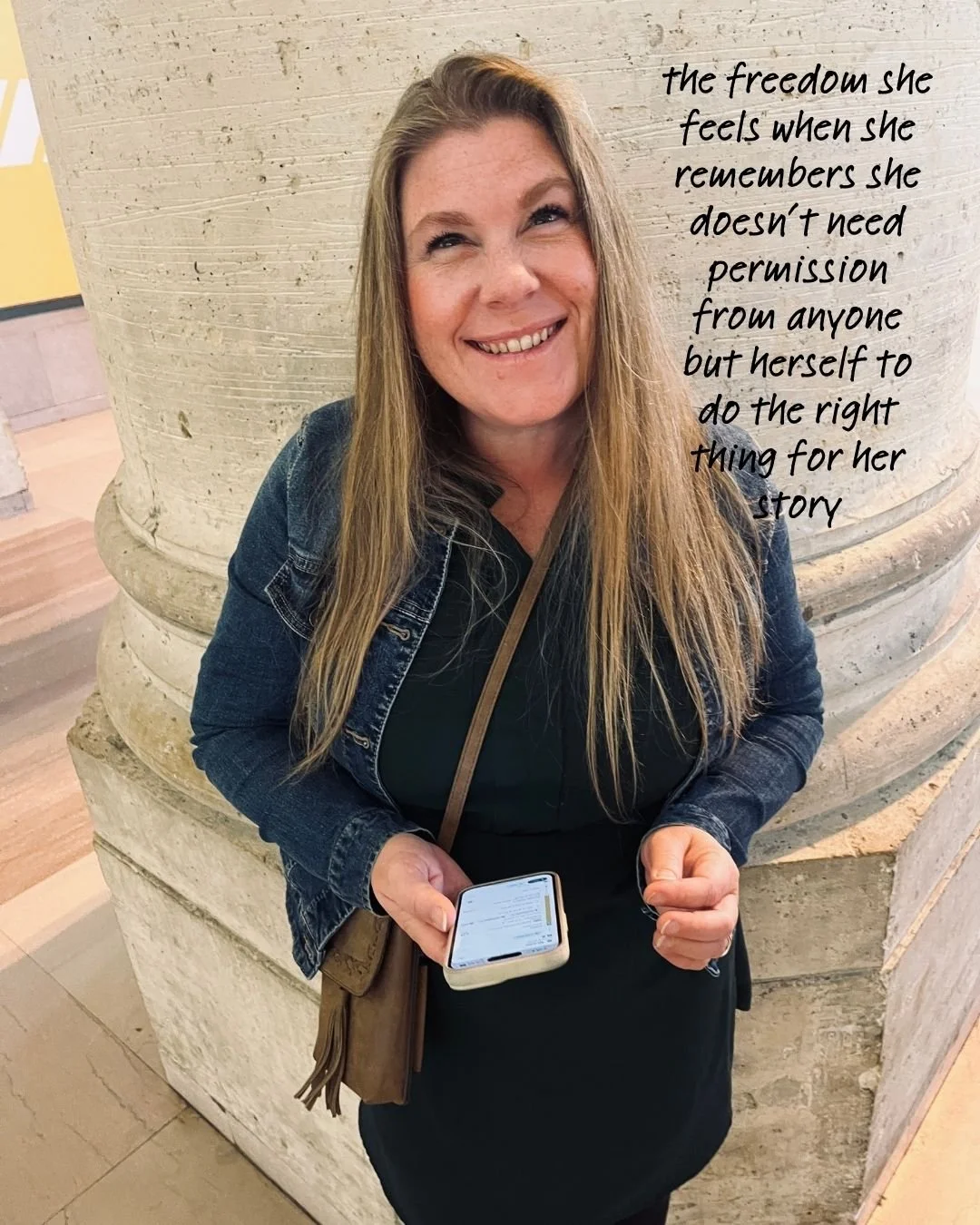
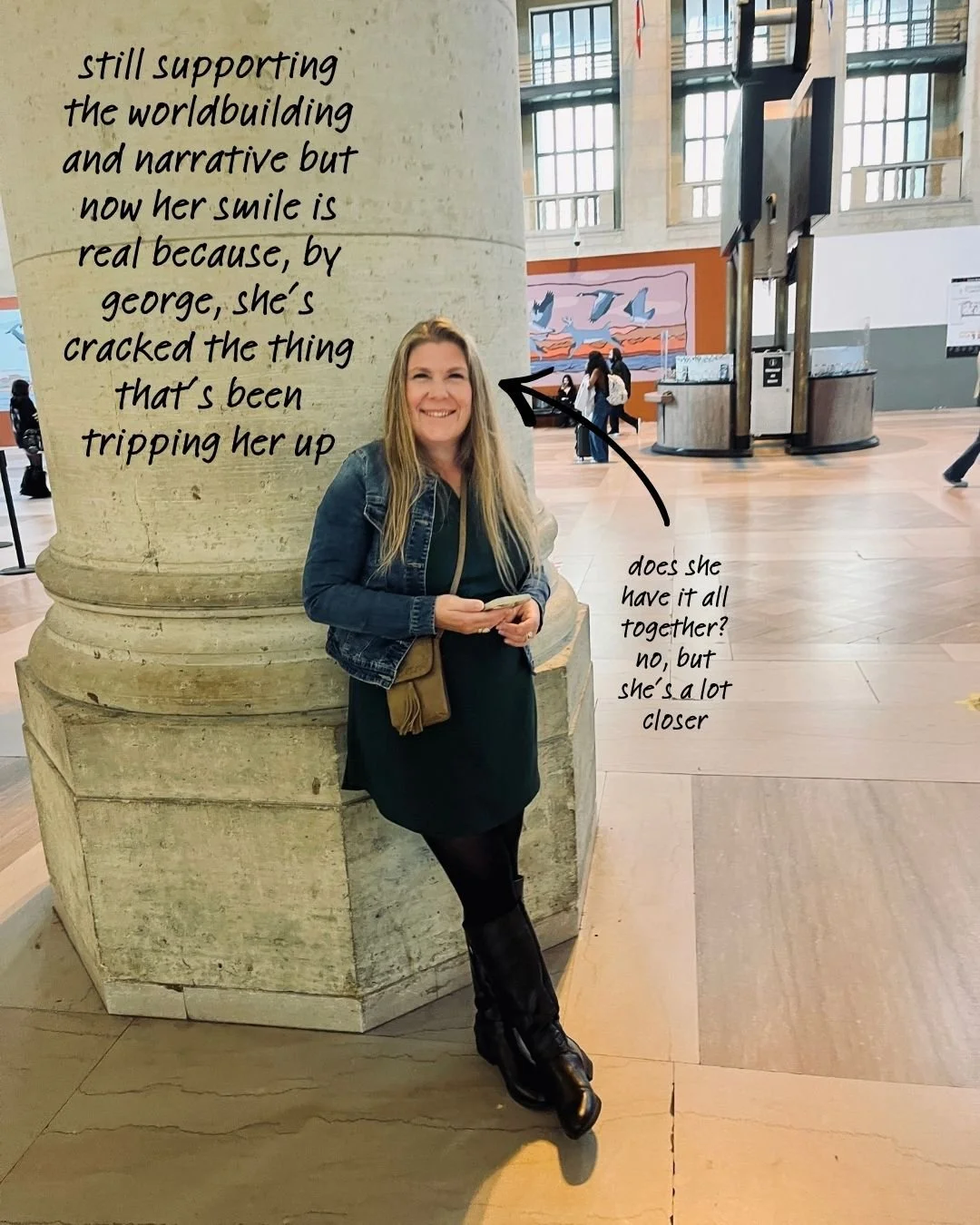
The photos were fun, I thought the message landed, and I found the perfect song to accompany it—a country track with a driving beat and lyrics that basically said "if you don't like what I’m doing, you can go kick rocks."
Cute, right?
The post did well. For a small account like mine any post that generates more than a couple hundred views feels like a tiny victory.
And I really liked that song. So I did what any normal person does—I looked up the band on Spotify to add them to my playlist.
Over 2.4 million monthly listeners. Impressive! Weird that I'd never heard of them before, but hey, good for them.
By the third song, the discomfort set in.
Same drum loop. Same formula. Lyrics that weren't clever so much as... cheesy. And not the good kind of cheesy that makes you belt it out in your car like Wilson Phillips. The boring kind. The kind that makes you realize you're not actually enjoying yourself anymore, you're just tolerating background noise.
So I Googled them.
They (it?) were an AI band, a band that had taken Spotify by storm.
My stomach dropped. I felt tricked.
Here's the thing: I've taken a stand against AI in creative spaces. Not in a burn-it-all-down, anti-technology way, but in a "this matters to real artists trying to make a living" way. As a publisher and magazine producer, I've been vocal about it. I've made decisions based on it. I've built my business around amplifying authentic human voices.
And here I was, having just promoted an AI-generated song to hundreds of people.
The devil on my shoulder whispered the easy answer: No one will notice. No one will care. Just leave it.
The angel on my other shoulder was quieter but more insistent: You know better. Stand in integrity.
I talked it through with my kids. I was embarrassed, yes, but also genuinely confused. If I liked the song—really, authentically liked it—what did that mean? Was my taste faulty? Was I a hypocrite?
And good grief, I really didn't want to take the post down. A few hundred views might not sound like much to someone with a massive following, but for me? That's something. Giving that up felt like a loss—especially when I’ve been working harder than I want to admit to build up my presence on social media.
I let it sit overnight.
When I woke up the next morning, I knew what I had to do.
I took the post down. I re-uploaded the carousel with a song from an artist I actually like—one for which I could, if I wanted to, buy a ticket to see perform live. An artist who breathes and sweats and struggles with lyrics at 2 a.m. An artist whose voice comes from somewhere real.
Then I recorded a reel explaining what happened. I owned the embarrassment. I broke down why I took the original post down and reposted. I talked about integrity and why it matters—not just in theory, but in practice, even when it's inconvenient.
The comments became their own conversation. One friend admitted, "It's funny, I noticed you had reposted this morning and I wondered why." She hadn't even heard the music but understood instantly why I'd done it: "I have no interest in art that wasn't made by humans."
Someone else pointed out the hypocrisy: Instagram wants us to disclose when we use AI-generated images, but doesn't label AI music? "Kinda sneaky," she said. And she was right.
The strongest comment came from a writer who called AI "a plasticized, soulless thief" and asked: "Do these people not realize they are complicit in a global attack on creatives and creativity each time they use this shiny toy?"
The word plasticized resonated with me. Because that's exactly what that music felt like once I knew. Smooth, shiny, technically proficient, and utterly hollow.
Singer-songwriter Kadhja Bonet articulates what many of us feel: "There's the obvious conclusion of taking away money and resources from artists who make a living this way, and who've dedicated our whole lives to this craft." It's not abstract. It's livelihood. It's survival for working artists.
My decision left me feeling calm. The kind of calm you only get when you've done the right thing, even when it cost you something.
Here's what I learned: liking something created by AI doesn't make you a bad person or a hypocrite. We're all navigating this weird new world where the lines are increasingly blurred. But once you know—once you have the information—that's when your choices start to matter.
I could have left that post up. No one would have called me out. But I would have known. And that knowing would have eaten at me every time I talked about supporting real artists, every time I made a publishing decision based on authenticity, every time I stood on my soapbox about the value of human creativity.
Even Spotify itself has acknowledged the problem. In September 2025, the platform admitted that AI-generated content can "dilute the royalty pool and impact attention for artists playing by the rules," and that harmful AI content "attempts to divert royalties to bad actors." When the platform profiting from the chaos admits there's chaos, you know it's real.
Integrity isn't about being perfect. It's about what you do when you realize you've gotten off track.
So yeah—I took down a post. I lost a little bit of engagement. But I gained something more important: the ability to look at myself in the mirror (or lean against a pillar in Union Station) and know I'm still standing where I say I stand.
The worldbuilding, the narrative weight, the ideas we carry—they all matter more when they come from somewhere real. From someone real.
And that's a box I'm happy to stay in.