What a Climate Fiction Panel Taught Me About the Genre I Accidentally Wrote Into
It’s hard to claim you don’t write climate fiction when your book is called When the Trees All Burned.
And yet, sitting on last night’s virtual panel at Canada Fiction Fest alongside cli-fi authors Margaret Sweatman, Jason Pchajek, and K.A. Wiggins (moderated by author Steve Hugh Westenra) I found myself realizing that there’s a difference between writing into a genre and knowing it from the inside out. I came prepared. I had thought hard about the questions, worked through my answers, knew what I believed about reclamation and stubbornness and what nature does with the silence we leave behind. That part felt solid.
What I wasn’t prepared for was how much I’d learn just by listening.
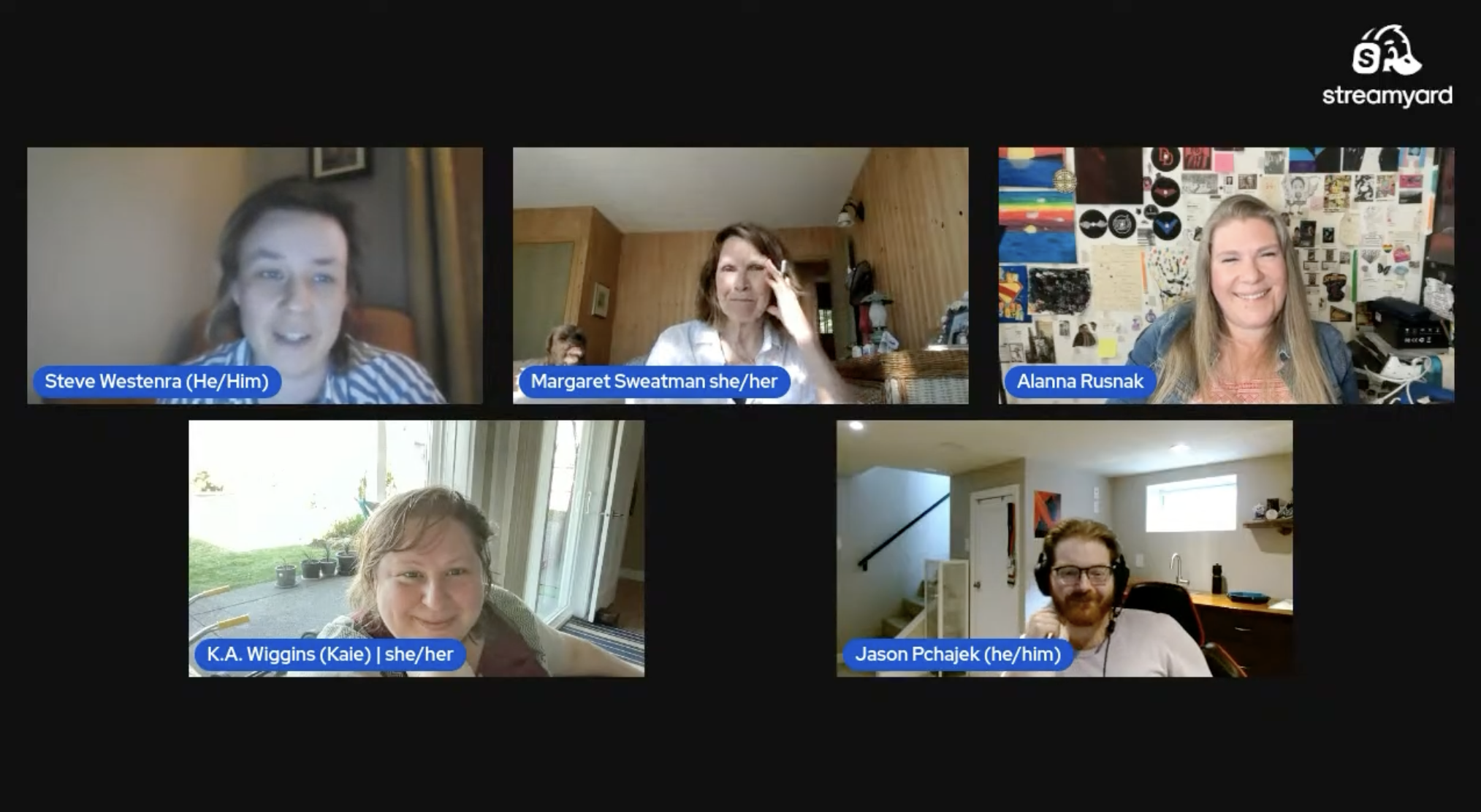
screenshot of the panelists for the Canada Fiction Fest author panel on Climate Fiction (June 24, 2026)
The other panelists brought a depth of genre knowledge that made me understand, somewhere around the second question, that I have been standing at the edge of cli-fi’s territory without fully crossing the border. I’ve read (and loved) Margaret Atwood’s MaddAddam trilogy. I’ve read (and loved) Emily St. John Mandel’s Station Eleven. I came to both of them after the themes revealed themselves in my own manuscript—which tells you something about how I got here. I didn’t set out to write climate fiction. I set out to write about what happens when most of humanity is removed from the equation. What does nature do with the silence? How does the planet respond when we stop being so loud and so relentless? Those questions were already living in my manuscript before I had any language for the genre I was unknowingly writing into.
Apparently that makes me cli-fi adjacent whether I planned it or not.
One thing I said on the panel that seemed to resonate was the distinction between climate fiction and dystopia. They get collapsed together a lot, but I think they’re doing fundamentally different things emotionally. Dystopia is grief. It mourns the loss of the systems we built, the grid going down, the world we constructed falling apart. Climate fiction—at least the way I'm writing it—is closer to hope. Not sentimental hope, not everything-will-be-fine hope, but the quieter and more stubborn kind. The hope that lives in reclamation. In what comes back when we stop crowding it out.
Climate fiction isn't new. It’s just newly named. Panelist K.A. Wiggins challenged us to think of it less as a genre and more as the centre of a Venn diagram that’s always existed. From Genesis to Huxley’s Brave New World to Lois Lowry’s The Giver—sacred text, literary classic, beloved children’s novel—writers have always been circling this. What’s changed is that we’ve run out of the luxury of metaphor. The wildfires are real. The near-miss asteroids are real. Climate fiction didn’t invent any of that. It just finally has a name for what it’s always been doing.
Though I’d add that hope doesn’t arrive without moving through grief first. What I write is stubbornness. The absolute refusal of humans to stop being human even when everything has burned. Atwood does this beautifully in the MaddAddam trilogy—there are characters who survive not because they’re the strongest or the smartest but because they can’t stop being human. They keep telling stories. They keep tending gardens. They keep falling in love. That stubborn insistence on meaning is what I’m reaching for in my own work. In my book, one character’s faith is in stories. Her job is to document what happened so the future can learn from it. Another character tells a parable about handing a stranger the best cantaloupe in the pile and walking away. Small gestures of grace in the face of annihilation. That’s not optimism—that’s something older and harder than optimism, and I think it might be the most honest thing fiction can offer right now.
What I walked away with was a clearer sense of what my book actually is and where it sits. When the Trees All Burned doesn’t ask what if the world ends — it asks who are you when it does? It’s set against a catastrophe decades in the making, and it follows the 200 people chosen to survive inside a dome while 99.998% of humanity doesn’t. I’m interested in moral complicity. In who gets saved and why. In the uncomfortable truth that resilience looks a lot like grief before it looks like hope.
I showed up to that panel standing at the edge of a genre I’d wandered into by accident. I left with a better map. And that feels like exactly what these conversations are supposed to do.
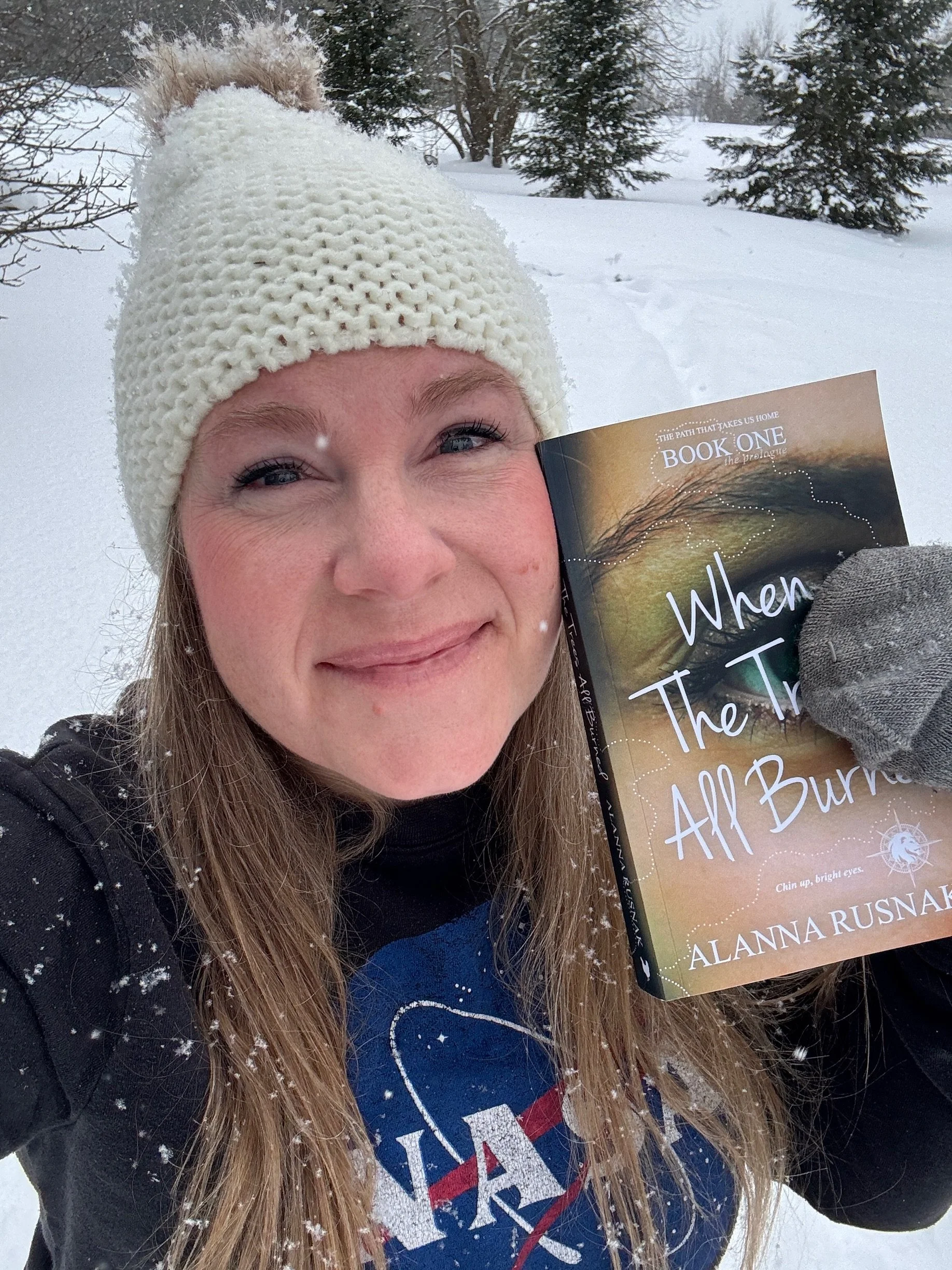
Canada Fiction Fest is a free, fully online celebration of Canadian authors—traditionally published, independent, and hybrid—brought to life by Ottawa fantasy author N.P. Thompson. If you missed the panel, keep an eye on the Canada Fiction Fest website for future events. And if any of this resonated, When the Trees All Burned is available for your reading pleasure.